At California Polytechnic State University, senior Colin Shea has exemplified how fraternity leadership can serve as the foundation for campus-wide impact. A member of Phi Delta Theta from Mercer Island, Washington, Colin has leveraged his fraternity experience into some of the most influential student leadership roles at Cal Poly.
From Fraternity Founder to Campus Leader
As a founding member of Phi Delta Theta’s chapter at Cal Poly, Colin quickly stepped into leadership. Serving as Chapter President in 2024, he elevated the chapter to Gold Star Chapter recognition, strengthened alumni engagement, and launched service traditions such as the Santa Rosa Park Adopt-a-Park initiative—later recognized by the City of San Luis Obispo.
These experiences not only honed his ability to manage peers and set organizational direction but also gave him credibility across campus. “My fraternity has been the foundation of my growth as a leader,” Colin said. “Each step of my journey—from chapter to IFC to student government—built on the one before it, teaching me how to scale my leadership from a single chapter to the entire student body to the city level.”
Leading at Scale
Colin’s fraternity foundation directly influenced his appointment as Chief of Staff to the ASI Student Body President in 2024–25, the #2 role in Cal Poly’s student government. In this position, he managed a $20 million organization representing 23,000 students, oversaw nine secretaries, and coordinated initiatives that reached the entire campus.
His achievements included restructuring the project approval process for efficiency, organizing the second annual Winter Club Fair that connected 3,000+ students with campus organizations, spearheading the It’s On Us sexual assault awareness campaign, and developing a 10-week leadership series. Colin also represented students in the integration between the California Maritime Academy and Cal Poly, ensuring student voices were heard in the transition.
Advocacy Through IFC and Beyond
In 2025, Colin was elected Interfraternity Council President, representing 18 fraternities and nearly 1,800 students. In this role, he advanced recruitment and risk management policies, built stronger student-community partnerships, and successfully advocated for city code reforms to expand housing opportunities for students.
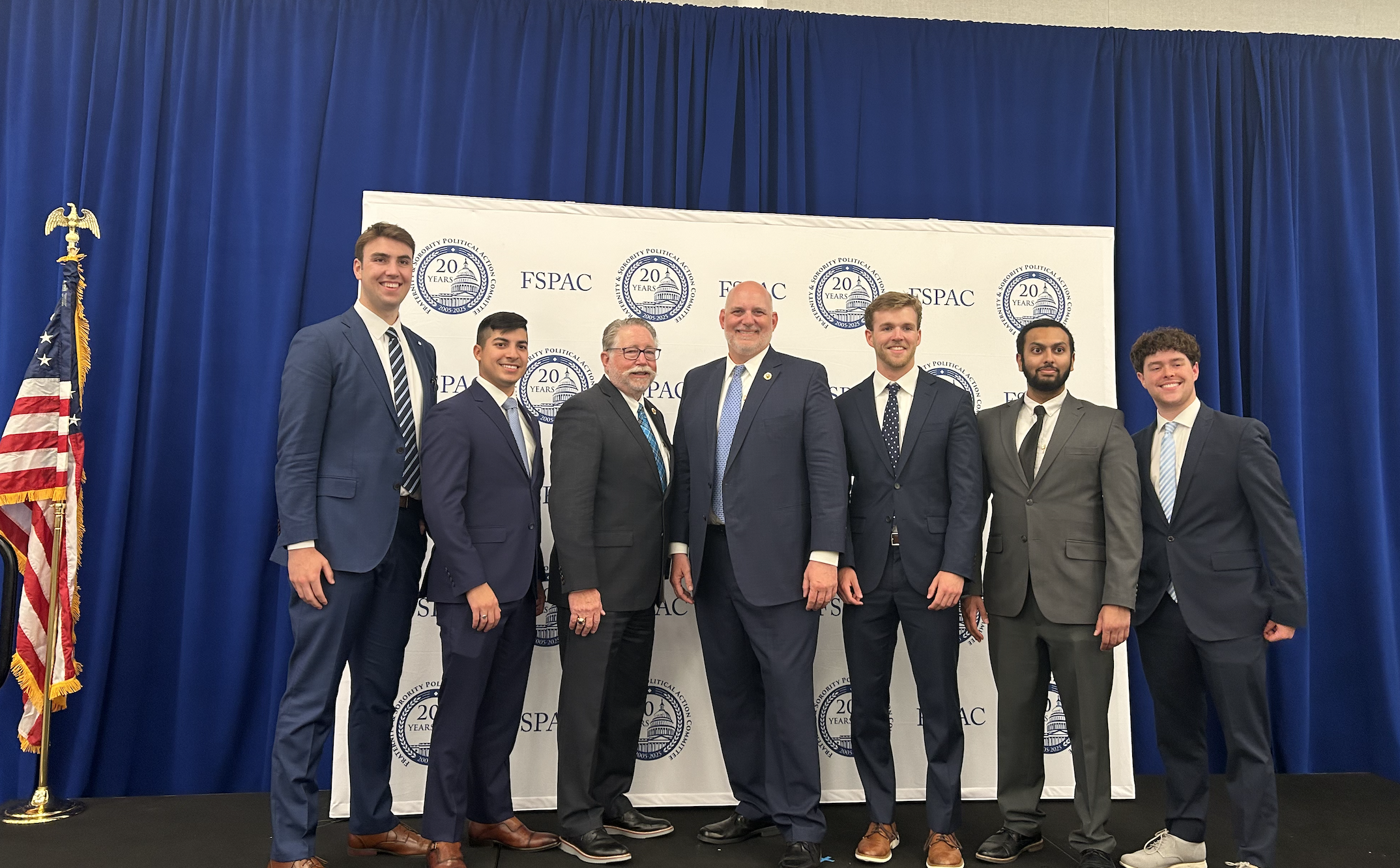
Colin also extended his advocacy to the national level, traveling to Washington, D.C. to lobby on behalf of students and fraternities on issues such as association rights, anti-hazing legislation, and charitable tax deductions.
Lessons from a Campaign
While serving in student government, Colin also ran for Student Body President. Although he did not win, the campaign reinforced his commitment to advocacy and transparency. “It pushed me to connect with hundreds of students across campus, sharpened my ability to communicate a vision, and taught me resilience in leadership,” he reflected.
Looking Ahead
Colin plans to pursue a career where technology, national security, and defense intersect. With a background in entrepreneurship, finance, and organizational leadership, he hopes to contribute to organizations that safeguard critical systems and shape strategic decision-making. His ambition is to work at the intersection of innovation, policy, and operations, strengthening both national resilience and global security.
From founding a fraternity chapter to leading a $20 million student government operation, Colin Shea’s journey is a clear example of how fraternity leadership creates pathways for influence and impact—on campus, in the community, and beyond.